Parkour Race - FreeRun Game
MadboxSports
4.35.82K Reviews
- Version
- 1.14.9
- Installs
- 50.00M
- Age Rating
- Everyone
Screenshots
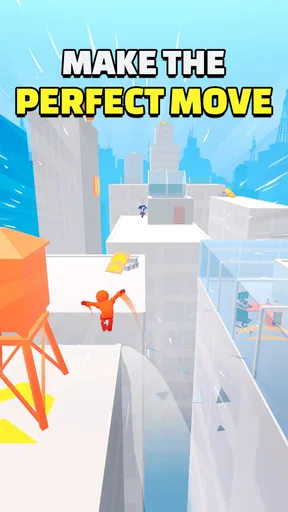
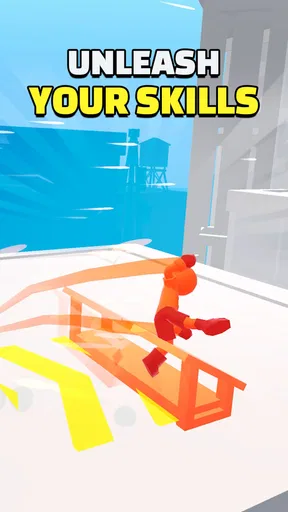
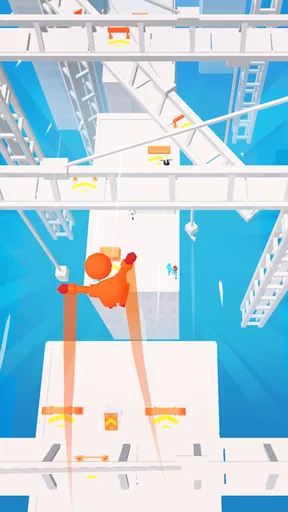
Our Review of Parkour Race - FreeRun Game
 Analysis by Appyee
I first approached Parkour Race - FreeRun Game expecting a quick sports game for short breaks, and that is exactly where it makes the most sense. It turns parkour into compact races built around timing, movement, and the satisfaction of finding a clean route through a course. I do not need a long setup or a serious commitment before playing, which makes it easy to pick up when I have a few spare minutes.
The game comes from Madbox and is free to download, with optional purchases ranging from $3.99 to $99.99 per item. It is listed for everyone, supports devices running Android 8.0 or later, and has reached over 50 million installs. Those figures suggest that its appeal is broad, but popularity alone does not tell you whether it will suit your habits. My experience is that it works best for players who enjoy fast retries and light competition rather than a deep simulation of real parkour.
How the current game feels in everyday play
The central attraction is simple: run, jump, climb, and move through a race as efficiently as possible. The fun comes less from studying a large world and more from reacting to the course in front of you. A good run feels almost automatic after a few attempts, while a poor one usually exposes a missed jump or a late decision immediately.
I found that this creates a useful rhythm. I can play one race while waiting for a bus, then stop without feeling that I have abandoned a long session. If I have more time, I can continue trying to improve my movement and chase better results. That short-session design is one of the strongest reasons to install it.
The controls are approachable, but the game is not completely mindless. Beginners can understand the basic idea quickly, yet consistent success requires attention to spacing and timing. The difference between an average attempt and a satisfying one often comes from acting slightly earlier, choosing a cleaner line, or avoiding a jump that looks tempting but costs momentum.
The real skill is not simply moving quickly; it is preserving a smooth route from one obstacle to the next. That distinction matters because players who only rush may find themselves making repeated mistakes. I had better results when I treated each race as a sequence of decisions instead of holding one direction and hoping the course would solve itself.
A good fit for short breaks and repeated attempts
In an everyday situation, I would use this game during a short break when I want something more active than a puzzle but less demanding than a full console-style session. A few failed attempts do not feel like a serious setback, and a successful run gives immediate feedback. It is also a reasonable choice for someone who likes sports-themed games but does not want realistic rules, team management, or complicated controls.
That accessibility comes with a trade-off. The experience is built around repetition, so players who need a strong story, extensive customization, or a large strategic layer may lose interest. The game gives me a focused activity rather than a broad career mode or a detailed athletic simulation. I enjoy that focus in short bursts, but I would not choose it as my only sports game.
What makes the movement satisfying
The most enjoyable part is learning how a course flows. At first, I react to individual obstacles. After several attempts, I start noticing the wider route: where to prepare for a jump, when to avoid a risky shortcut, and how one movement affects the next. That gradual improvement gives the game more substance than its quick format might suggest.
This also creates a useful personal rule: do not change everything after one mistake. If a run fails at the same point, I focus on that transition rather than restarting with a completely different approach. That makes practice more deliberate and helps reveal whether the problem is timing, positioning, or simply choosing an inefficient path.
Another practical tip is to avoid playing on autopilot. Because races can feel familiar after repeated attempts, I sometimes make careless movements precisely when I think I know what is coming. Taking a brief pause between attempts helps me remember what went wrong instead of repeating the same input with more frustration.
What the version and history suggest
The game was released on March 6, 2020, and the current version is 1.14.9. I see that as evidence of a product that has continued beyond its initial launch rather than a one-off experiment. The version number alone does not tell me that every update transformed the game, so I would not treat it as a guarantee of major new content. What it does establish is that the title has had time to mature and remain available to a large audience.
For someone installing it today, that history has two sides. A mature casual game can feel more settled and easier to understand than a brand-new release. At the same time, players hoping for constant reinvention should keep their expectations measured. The core appeal remains quick parkour racing, so the value comes from enjoying that loop rather than waiting for it to become a completely different kind of game.
The public response is strong enough to be meaningful: it holds a 4.3 average from around 199 thousand ratings, with roughly 5.8 thousand written reviews. I treat that as a useful sign that the basic formula connects with many players, not as proof that every device or playing style will feel identical. Written feedback and personal tolerance for repetition still matter more than a single number.
How the established design affects returning players
If you played it before, the biggest benefit is familiarity. You can return without relearning a complex control scheme or reconstructing a long narrative. That makes it especially comfortable as a casual game kept on a phone for occasional sessions. I appreciate titles that let me come back after a week away without punishing me for forgetting details.
The downside is that returning players may notice the limits of the compact format more quickly. Once the movement pattern feels familiar, the question becomes whether improving individual runs is enough motivation. For me, it is enough when I am in the mood for quick competition, but not when I want a fresh progression system or a more varied sports experience.
New players should also know that “free” does not necessarily mean completely free of commercial pressure. The game can be downloaded without an upfront charge, while optional purchases are available. I would begin without spending anything and decide only after seeing whether the basic racing loop holds my attention. That approach is particularly sensible for younger players, even though the content rating is Everyone.
Where it compares with other sports games
Compared with a football, basketball, or racing simulation, this game asks for much less time and knowledge. There are no complicated team choices to master in the moment, and I do not need to understand realistic athletic systems to enjoy a race. Its advantage is immediacy: I can start moving almost at once.
Compared with endless runners, it feels more deliberate because the course invites me to think about a route rather than simply survive as long as possible. That difference is important. If you like endless runners mainly for their constant forward motion, this may feel more structured. If you prefer seeing a mistake, retrying, and refining a specific sequence, the parkour format is more rewarding.
It is also lighter than a dedicated multiplayer sports title. I would not install it expecting the social depth, team identity, or long-term competitive framework of a major online sports game. I would choose it when I want the sensation of racing without the preparation and maintenance that larger alternatives often demand.
Where the experience still has limits
The main limitation is repetition. The same focused design that makes the game convenient can also make it feel narrow. If you need a rich story or a large variety of activities, the parkour race loop may not provide enough contrast. I would skip it if my priority were a detailed simulation, a narrative adventure, or a game built around long strategic sessions.
There is also a difference between accessible controls and effortless mastery. The first few races may seem straightforward, but improving consistently can require patience. Players who dislike restarting after small errors may find the learning process irritating. I enjoy retrying when I can see a clear reason for failure; I am less enthusiastic when I am playing while distracted.
Optional purchases are another consideration. The price range reaches from $3.99 to $99.99 per item, so I would pay attention before confirming anything. The free entry point is useful for testing the game, but families should still manage purchasing habits on the device. My recommendation is simple: play long enough to decide whether the movement itself is enjoyable before considering any paid option.
Device compatibility is also worth checking before installing. The Android requirement is version 8.0 or later, which covers many phones but not every older device. On a suitable phone, the game’s short-session nature makes it convenient, but a smaller screen or an aging handset can make precise movement less comfortable. I would test the controls during a calm session rather than judging them after one rushed attempt.
Who should install it, and who should pass
I would recommend it to casual sports players, fans of quick arcade challenges, and anyone who likes improving through repeated attempts. It is particularly suitable for people who want a game that can be opened for a short break and put away without losing a complicated campaign.
I would be more cautious about recommending it to players who want realistic parkour technique, a substantial story, deep character development, or a broad sports-management layer. It is also not my first choice for someone who becomes frustrated by repeated restarts or prefers games where every session feels substantially different.
One of the best ways to decide is to ask what kind of satisfaction you want. If you want the small victory of taking a cleaner line and finishing a race more smoothly, this game has a clear purpose. If you want a sense of building a team, exploring a world, or mastering a detailed ruleset, another category will probably serve you better.
My final view after spending time with it
Parkour Race - FreeRun Game succeeds because it keeps its idea focused. Madbox has built a sports game around movement, quick races, and the desire to try once more after a mistake. I like that I can understand the premise immediately while still having room to improve my timing and route choices.
Its large audience, high install count, and 4.3 average show that the formula has broad appeal, but the more important question is whether you enjoy repetition with a purpose. For me, the answer is yes in short sessions. I can play it while waiting somewhere, use a few attempts to sharpen a weak transition, and stop before the experience becomes a chore.
The game is free to start and rated for Everyone, but I would still keep the optional purchase range in mind and check the Android requirement before installing. I would also approach the current version as a mature continuation of an established concept, not as a promise of endless transformation. That makes the decision clearer: install it for the compact parkour racing that exists now.
My recommendation is positive, with a specific condition. Choose it for quick, repeatable arcade sports action, not for a full sports simulation. If that description matches what I want from my phone, it earns a place on it. If I am looking for depth, narrative, or constant variety, I would spend my time elsewhere.
Verdict
Strengths of Parkour Race - FreeRun Game
- Fast, responsive controls make short runs feel satisfying.
- Quick races are ideal for brief gaming sessions.
- Bright visuals and animations make obstacles easy to read.
- Simple mechanics are accessible to casual players.
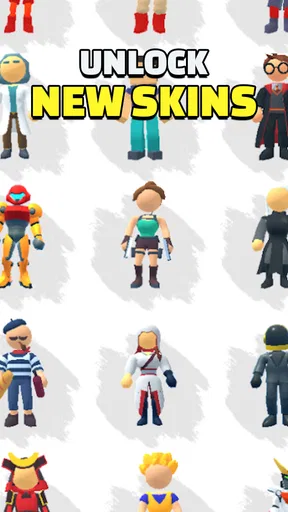
- New characters and outfits add variety to progression.
Limitations of Parkour Race - FreeRun Game
- Frequent ads can interrupt the flow between races.
- Upgrades and cosmetics may encourage repetitive grinding.
- Some levels rely heavily on timing rather than strategy.
- Touch controls can feel imprecise during fast sequences.
- The gameplay may become repetitive after extended sessions.
Other Releases by Madbox
View All
Stickman Hook
Arcade4.2

Pocket Champs: 3D Racing Games
Arcade4.5
Similar Picks in This Category
View All
8 Ball Pool
Miniclip.com4.8

Pooking - Billiards City
AIM TOP GAME TECHNOLOGY LIMITED - pool4.6

Carrom Pool: Disc Game
Miniclip.com4.4

EA SPORTS FC Soccer Mobile 26
ELECTRONIC ARTS4.6

World Soccer League
mobirix4.3

Soccer Cup 2026: Football Game
INLOGIC SPORTS - football tennis golf soccer4.3
Frequently Asked Questions
What is Parkour Race - FreeRun Game?
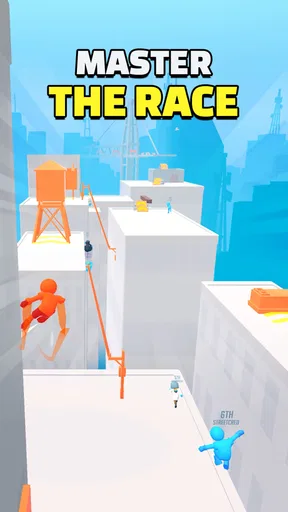
Parkour Race - FreeRun Game is a fast-paced mobile racing game centered on parkour-style movement. You control a runner who jumps between rooftops, vaults over obstacles, flips through the air, and races against other characters toward the finish line. The controls are designed to be simple, but timing your jumps, landings, and shortcuts becomes increasingly important as the courses become more challenging.
How do you play Parkour Race - FreeRun Game?
Gameplay is mainly based on tapping or swiping at the right moment to make your character jump, perform tricks, and move efficiently across the course. The objective is to reach the finish line before your opponents while avoiding obstacles and using ramps or elevated routes. Although the controls are easy to understand, successful runs require good timing and quick reactions, especially when several hazards appear together.
Can Parkour Race - FreeRun Game be played offline?
Some parts of Parkour Race - FreeRun Game may remain accessible without a constant internet connection, particularly basic running or previously loaded content. However, online features, advertisements, event content, leaderboard updates, rewards, and certain progression systems may require connectivity. Availability can vary by device and game version, so players should not assume that every feature will work offline before traveling or playing without mobile data.
Is Parkour Race - FreeRun Game free to download and play?
Parkour Race - FreeRun Game is generally available as a free download, allowing players to begin racing without paying an upfront purchase price. Like many free-to-play mobile games, it may include advertising, optional in-app purchases, cosmetic items, upgrades, or other paid extras. These purchases are not necessarily required to try the main gameplay, but users should review the store listing and device purchase settings before playing.
Is Parkour Race - FreeRun Game suitable for children?
The game is generally easy to understand because it uses cartoon-style visuals, short races, and straightforward controls rather than complex instructions. Nevertheless, parents should check the age rating shown in the Google Play Store or App Store, since ratings and content classifications can differ by region. It is also sensible to review advertising, in-app purchase, privacy, and online interaction settings before allowing younger children to play.
Play our best games!


